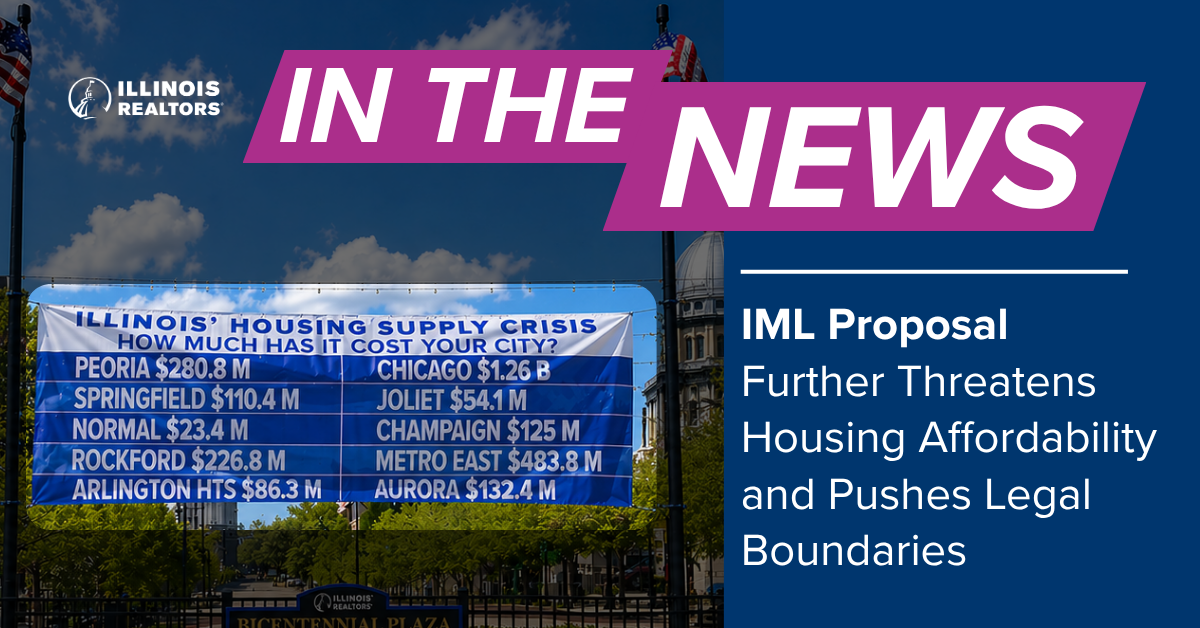












A recent Crain’s op-ed, “A City That Works: Illinois Can’t Let Politics Deepen the Housing Shortage,” makes it clear: Illinois has a housing crisis. The state is short more than 140,000 homes and needs more than 200,000 new units in the next five years just to keep up with demand. The Building Up Illinois Developments, or BUILD Plan, could help fix the problem.
The op-ed pokes holes in opponents’ claims about BUILD:

Argument 1: More housing won’t improve affordability
“Our housing shortage is not just a city phenomenon. In Bloomington, median home prices more than doubled between 2019 and 2024. In the seven-county Chicago region, the total number of households grew by 6.8% over the last 10 years in the average municipality, but the number of homes grew by only 4.8%, according to data from the Chicago Metropolitan Agency for Planning. That’s a problem, because by definition, each household needs a house. It’s not surprising that rents and asking prices have climbed rapidly as a result.”
Argument 2: New housing will strain infrastructure and schools
“Concerns about infrastructure are also misplaced. The governor’s proposal includes $250 million in funding for infrastructure upgrades, and infrastructure like sewer systems generally operate well under capacity in most municipalities. Dense infrastructure is also generally much cheaper to support than sprawl; the fewer miles of sewer or road every taxpayer has to cover, the better.”
Argument 3: Local governments are best positioned to solve this
“Broadly speaking, building more housing is popular. In Illinois, recent polling indicates 82% of voters want to see their state legislators address the housing crisis and 65% said state legislators should prioritize more homes, while just 18% preferred deferring to the power of city governments.
But it’s one thing to want more housing. It’s quite another to put up with construction and traffic and change in your backyard. And while the vast majority of residents who are unbothered by a development are unlikely to advocate for it (or be paying attention at all), you can count on a small minority to show up and complain. That puts local leaders in a terrible bind.”
The Bigger Picture
The Crain’s op-ed frames the issue clearly: Illinois is facing a collective action problem. Everyone agrees more housing is needed, but local resistance prevents meaningful progress. If Illinois is serious about lowering housing costs and expanding opportunity, maintaining the status quo is not a viable option.